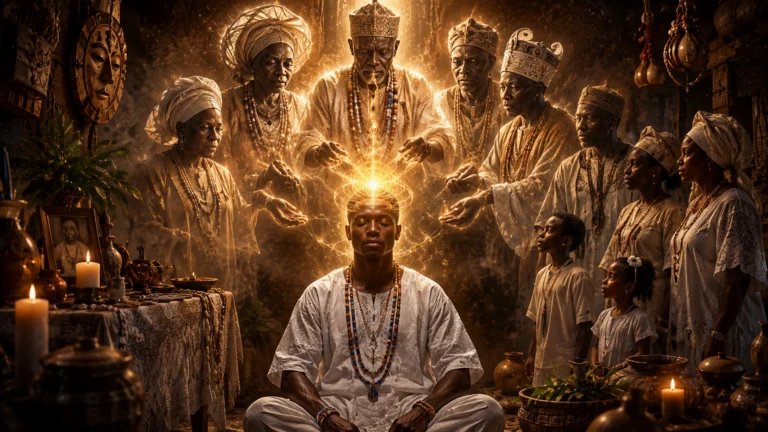
What we see, hear, and consume every day shapes our souls. Choosing consciously is a spiritual act that defines who we are becoming.
What you consume also shapes your spirit
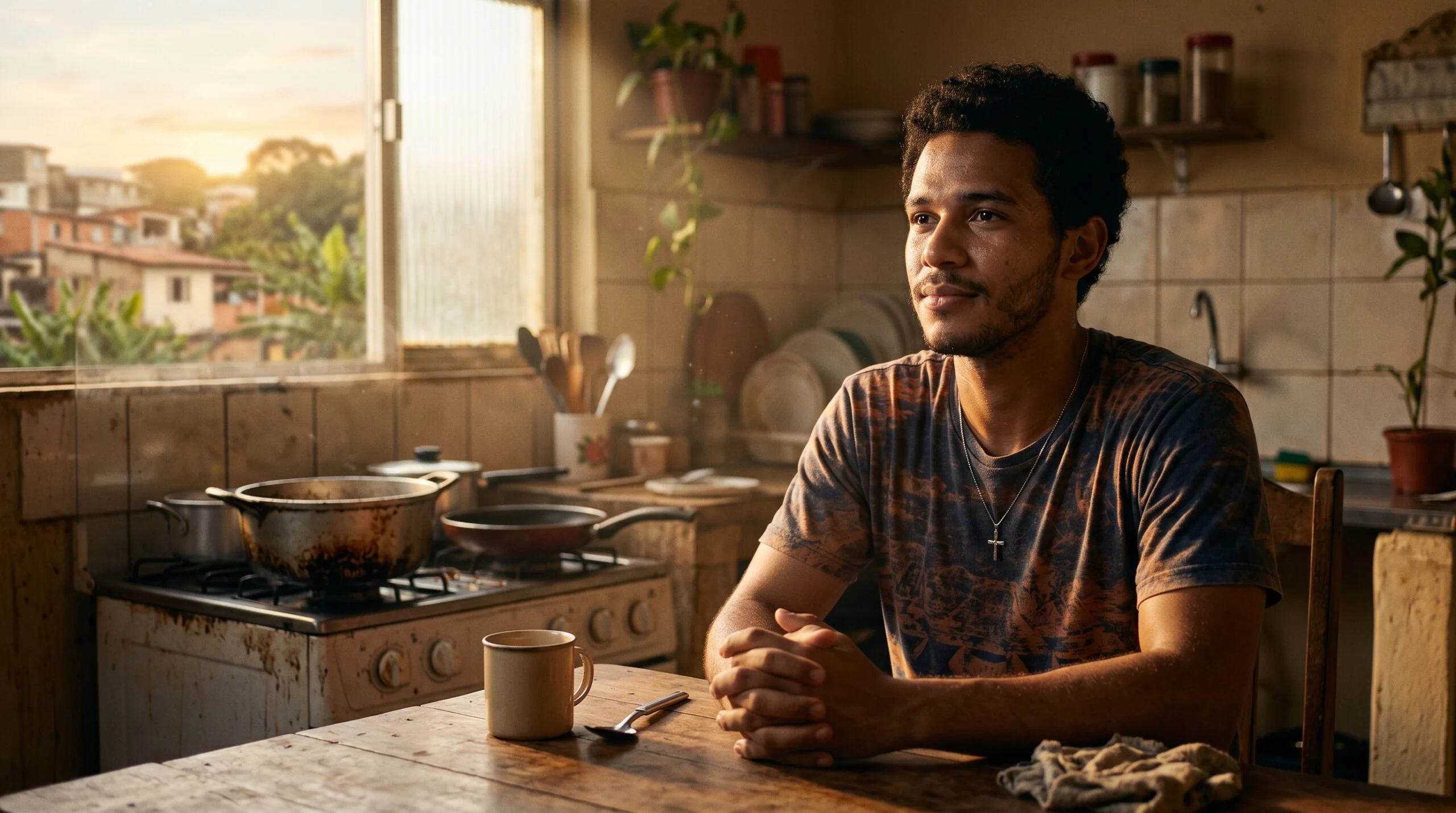
Sometimes we need to turn toward a sacred path of love and goodness within Umbanda’s liturgy.
We live in a time when the world’s windows have opened into our sacred terreiros and homes. And with them, storms and challenging situations have also entered our lives.
This is not about condemning characters or scenes, but about understanding what we are allowing into our inner spiritual and moral lives.
What we see, hear, and feel in front of any screen plants seeds. Some bloom into virtue. Others, into shadows.
We must be careful about what entertains us because, without realizing it, we are shaped by what we accept as normal. And so, everything we have built over decades can slip away like fine sand between our fingers.
In his gentleness, Pai Francisco da Guiné has never imposed. He invites. And if he were beside you today, facing content that glorifies violence, betrayal, sarcasm, and emptiness, what position would you take as an Umbanda medium?
It is not about kissing or gender. It is about values. About what enriches the heart and what weakens the spirit.
Umbanda’s moral teachings, so wisely shaped by our kind guides of light, remind us: yes, we are susceptible to influence.
Pai Francisco da Guiné has shown us, on so many occasions, the vibrational effects of our most subtle habits.
Our Caboclo Flecheiro das Matas Virgens lived as a quiet example of what it means to choose what we see, say, and share.
We are on an invisible battlefield. Not between people, but between choices. Every channel we turn on is a vote. Every like is a show of support. Every silence is permission.
If we want a fairer, more sensitive, more humane society, let us begin by choosing what nourishes our souls.
The media has power, yes. But the greater power is still ours: to say “no” to what does not uplift us and “yes” to what transforms us.
You are not alone. Many are awakening. And together we can call for more light, more ethics, more beauty, and more purity in our daily journey.
Let us remember: our preferences are prayers in disguise. They reveal who we are becoming.
Some flowers bloom in full sun. Others prefer the quiet of the shade. Some open early, others in the late afternoon. But all are flowers, and all are needed in the garden of life.
So are we: souls on a continuing journey, carrying different stories, invisible scars, and dreams held in our hearts.
Each of us is born beneath a different sky, learns along different paths, loves in different ways… and yet we are all children of the same love that governs the universe.
Who gave us the right to judge another person’s journey when we cannot see the calluses on their feet?
Who authorized us to measure a soul by its body, faith by appearance, or worth by social standing? That does not come from God.
It comes from human pride, which still walks unsteadily on the road of true love.
Umbanda’s teachings remind us that we reincarnate many times, in different roles and circumstances. Today’s rich person may have been yesterday’s poor person.
The one who teaches today once needed to learn. And the one who suffers today may once have caused suffering.
So we turn through time, learning the most difficult lesson of all: to love others as they are.
The spirit has no color, no gender, and no borders. It has a light of its own. And every outward difference is a divine invitation to awaken acceptance, respect, and compassion.
The world does not need more divisions. It needs bridges. Not judgments, but outstretched hands.
Making a difference means embracing others as they are, without forcing them into molds or demanding that they meet a standard.
Respecting differences means recognizing the greatness of God, who created each soul as a unique verse in the infinite poem of creation.
Let us reflect on this. And love more.
We are those who make a difference, guided by the awareness that we are Umbanda practitioners and that we honor our entities of light.
Ilê Axé Luz de Odara
Jacareí (SP) and Heliodora (MG)