Between Orún and Aiyê, some souls arrive already carrying the mystery of return.
Abikú
Born to die (a bi ku), “We gave birth to him and he died” (a bi o ku): a term for children or young people who pass on before their parents. There are thus two types of Ábikú: the first, Ábikú-Omode, refers to children; the second, Ábikú-Agba, refers to young people or adults who pass on, generally at significant moments in their lives and always before their parents.
This reverses the natural order, socially accepted and understood as follows: those who arrived in Aiyê (the physical world) first return to Orún (the spiritual world) first. Beyond this natural logic, the issue also involves the assurance of continuity in Aiyê and the certainty that the ancestors will be remembered and worshipped. They leave descendants who will retell their stories through time, thus ensuring their survival within the community.
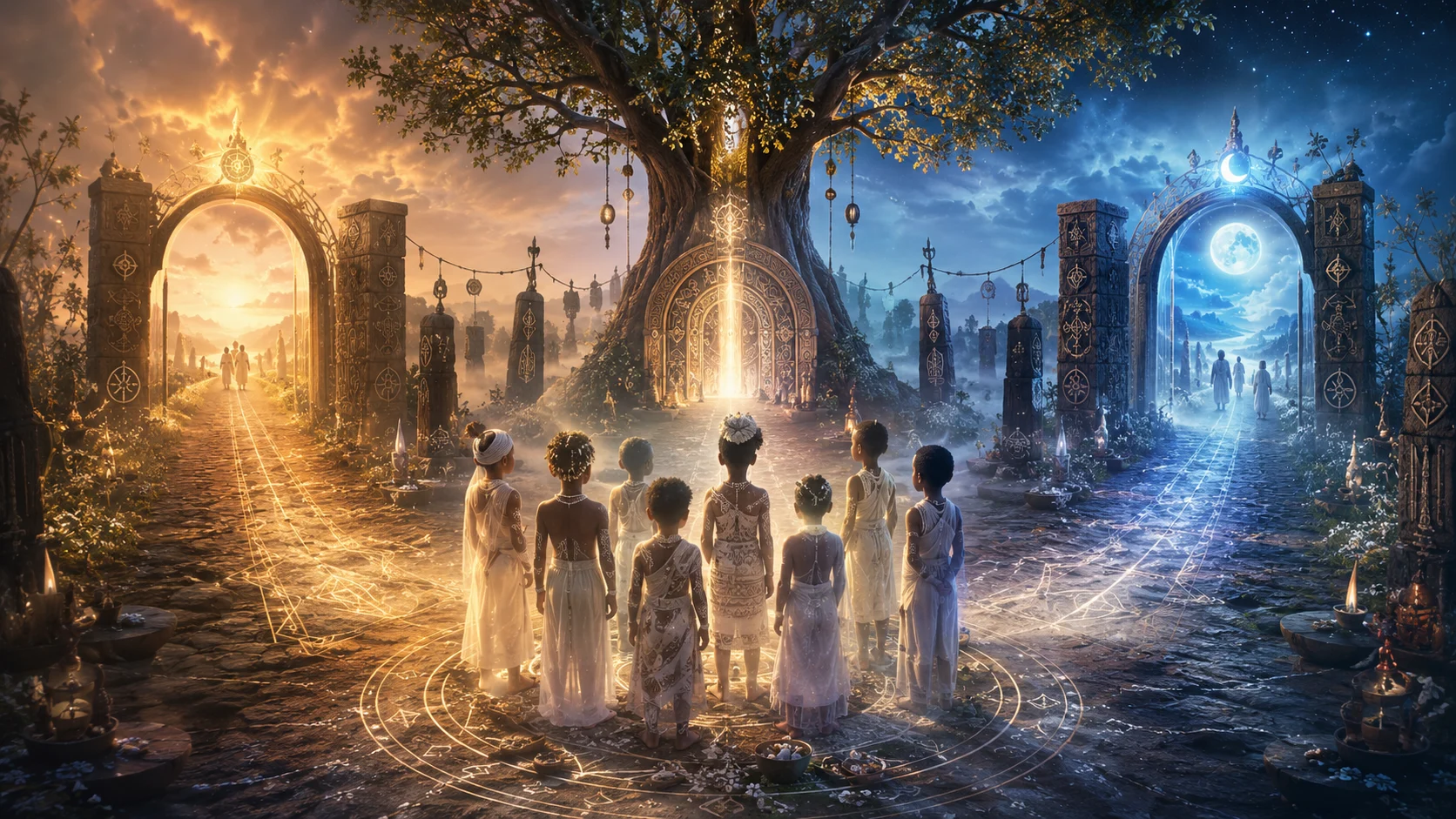
In Orún lives a group of children called Emere or Egbe, who form the Egbé Orún Ábikú: the society of children who are born to die. Legend tells that the Abikús first came to Earth in Awaiye, in a group of two hundred and eighty, brought by Alawaiye, their leader in Orún.
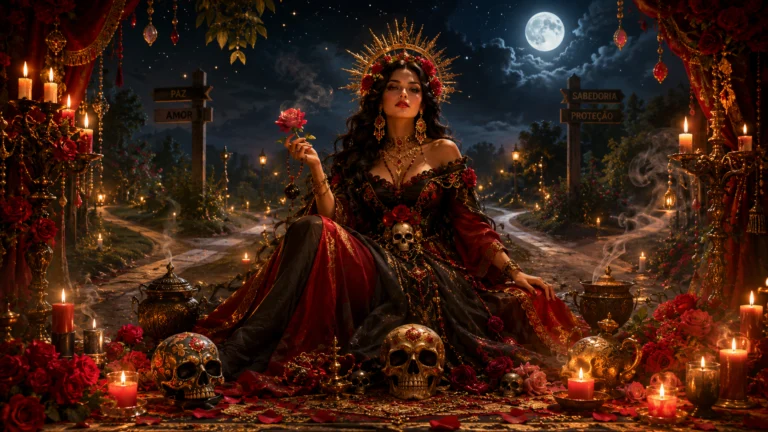
At the crossroads connecting Orún to Aiyê (Ikorita Meta), they all stopped and made various pacts, determining the particular moment when each would return to Orún. Some would return when they first saw their mother’s face; others when they married; a third group after reaching a certain age; a fourth when they had their first child, and so on. Neither their parents’ affection and love nor any gifts they might receive would be able to keep them on Earth.
This pact had to be fulfilled, and their companions in Orún (Heaven) would remain present in their lives, interacting with them day by day so that they would not forget and would return to Orún as soon as the agreed moment arrived.