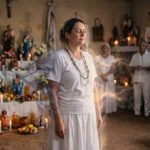
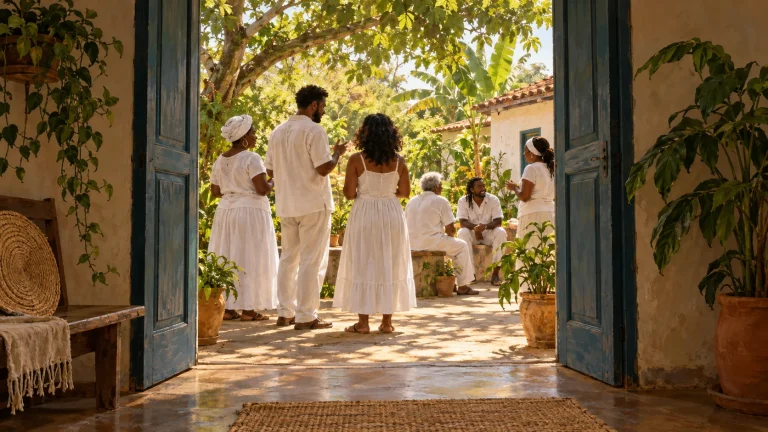
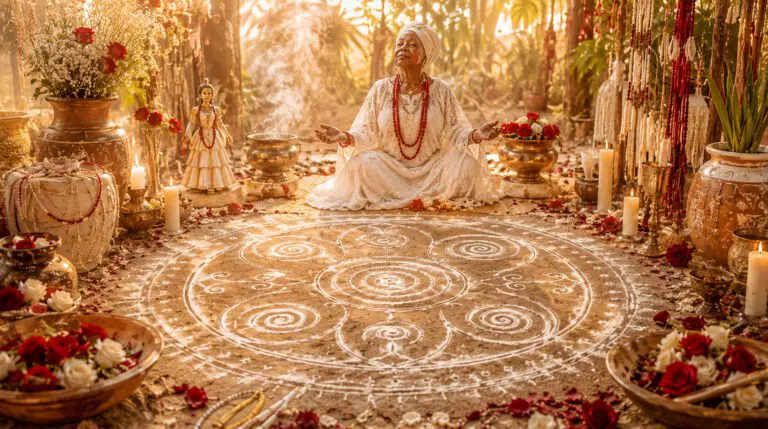
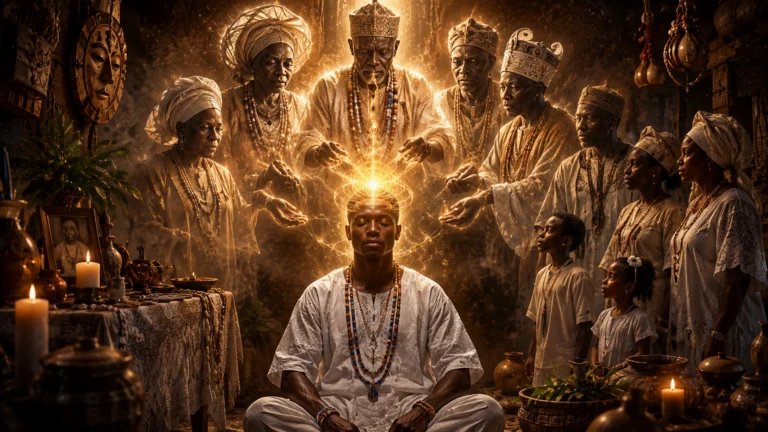
In Umbanda, no gesture is accidental. Every movement within the terreiro carries respect, meaning, and a connection to the sacred.
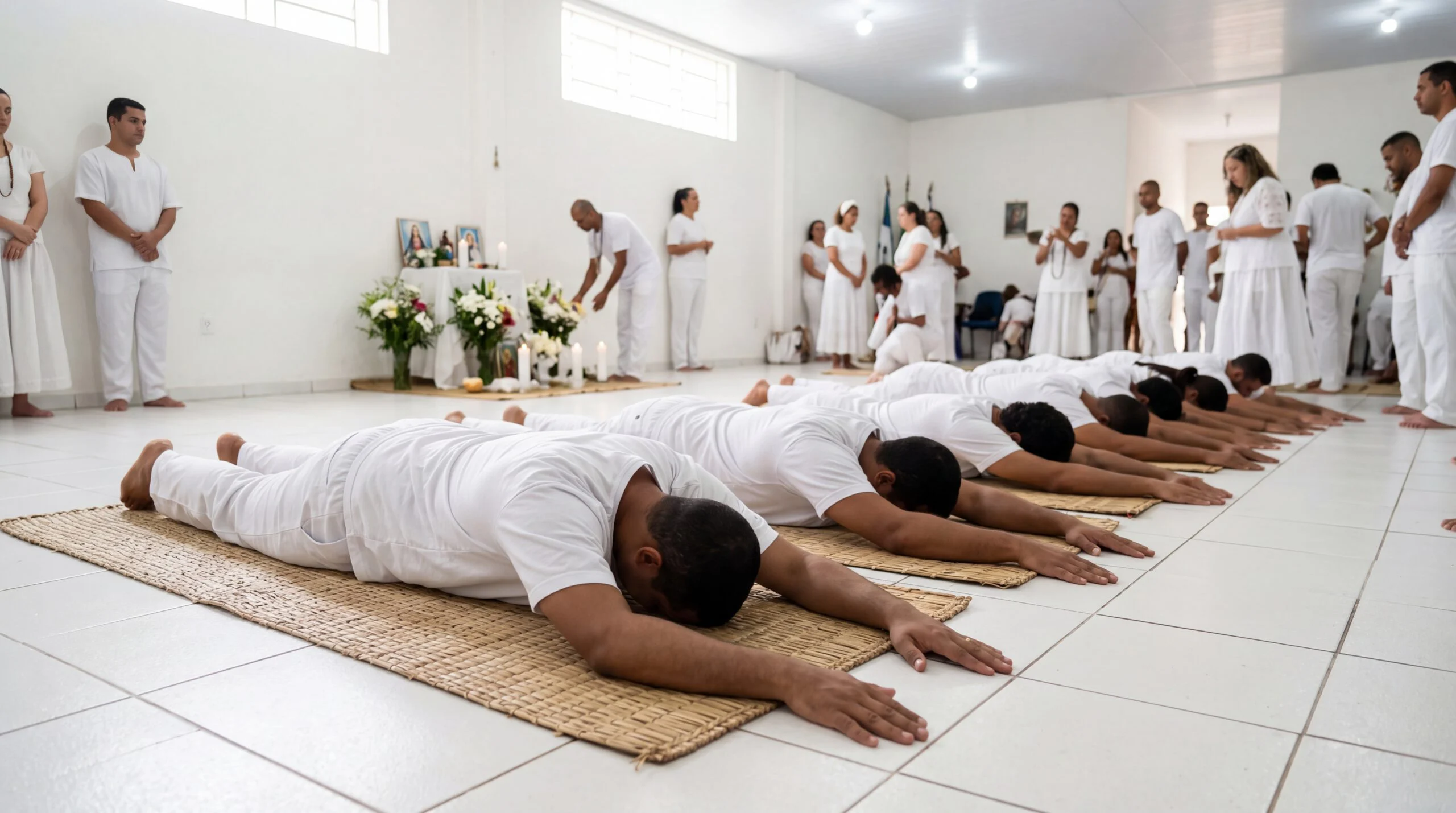
There is a meaning behind every bodily movement made in the terreiro during a gira. When we enter the space, join the spiritual circle, or greet an Orixá or Guide, we are showing respect for the sacred. We call these movements ritual behavior.
New followers may feel a little lost, and even longtime practitioners may repeat these gestures mechanically without knowing exactly what they mean. Although they know it is a sacred act, it is important to understand its meaning. Many of these rituals were inherited from Candomblé.
Main Acts and Rituals
The act of bowing one's head to the ground
Found in various religions, it expresses respect, humility, surrender, and gratitude. In Umbanda, it is a gesture of reverence to the Orixás and Guides of the terreiro. In some cases, it is also performed for priests, atabaque drums, and tronqueiras.
Making the sign of the cross on the terreiro floor with your hands
Many followers make this gesture when entering the terreiro; it is connected to the mystery of the cross. By marking a cross on the ground, you greet what is above, below, to the right, and to the left, asking permission and honoring the sacred force present in that place.
Tapping your fingertips on the ground
This is a way to greet the triangle of forces of the right and left, as well as to ask for Agô (permission).
- With the right hand, making the sign of the cross: a greeting to the Pretos Velhos.
- With the left hand, palm facing the ground: a greeting to the Exus.
Touching the head with your hands (forehead and nape)
A gesture inherited from Candomblé. By alternately touching your forehead and the nape of your neck, you ask for your path to be illuminated and guided by your Orixá.
- Female Orixá: forehead and left side
- Male Orixá: forehead and right side
Tapping the backs of your hands
A greeting to the forces of the left and to male and female guardians.
Clapping and bowing
A gesture of respectful greeting to an Orixá or Guide.
Embracing while touching shoulders
This represents a greeting to the forces of the right and left, to the feminine and masculine, and also symbolizes equality and fellowship.
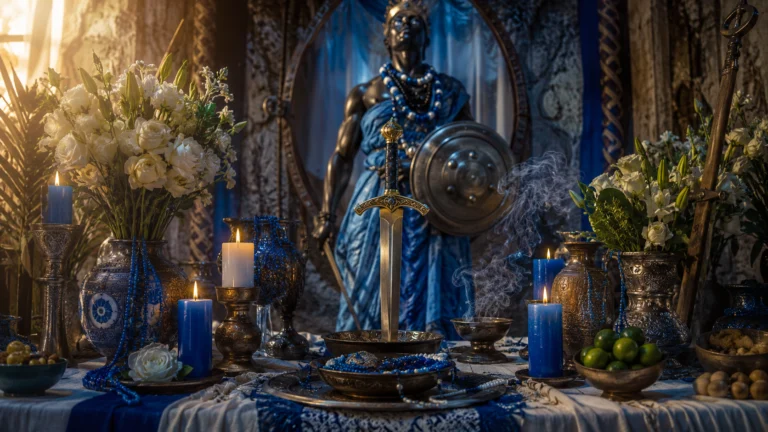
Kneeling before the congá
This shows humility, surrender, and respect before the Orixás, Guides, and God.
Being barefoot in the terreiro
The terreiro’s ground is sacred. Removing your shoes symbolizes respect and humility. It is also believed that negative energies are released and transmuted by the ground.
Whenever you visit a terreiro, remember that you are entering a sacred place, filled with axé and positive energies. With faith, you will receive these energies for your well-being, whether you are seeking a consultation, are a medium, or are a supporter.
That is why we always say: